

Productive Conflict Between Healthy Couples: How a Healthy Couple Can Learn to Have Healthy Conflict
The following blog consists of excerpts from my workbook chapters that can be found under the ‘workbook’ tab.
Most of us have such an unhealthy relationship with conflict that we avoid it and then lose the opportunity to set ourselves up for success. Yet the time will come when the conflict lands. We can dodge and weave to avoid it—by distracting our Self, being dishonest with our self that ‘there’s no ‘there’ there,’ and looking away, but avoiding needed conflict costs us and costs our relationships. But we are not avoiding conflict for no reason because, the thing is, many of us just don’t know how to engage conflict in a healthy, effective way. And, on top of that, we may not even notice that we don’t know how and assume that the way we’ve always engaged conflict is how it’s done even if it leaves us and our partner feeling lousy and frustrated.
The best time to talk about conflict (surprise!) is when we’re not in conflict.
Here are the actionables from this workbook chapter, and there are ‘howto’s’ in the workbook about each one. I urge my couples to set themselves up for success in the following ways:
Setting their frame for conflict
Growing strategies for self-support during conflict
Creating strategies to handle the intense emotions that rise up during conflict
Normalizing together that conflict is healthy and reaching an agreement that conflict can be very hard and painful, but it’s necessary.
Also, the approach to conflict outlined in this workbook is geared toward emotionally healthy couples.
However, that said, no one is perfectly healthy, constantly healthy, or never guilty of dipping into unhealthy behavior. As you read through this workbook chapter, check to see if you like this approach and believe that, over time, you and your partner could imperfectly adopt this framework for your relationship. If you do, then I hope you both will be helped by this approach to conflict!
The cornerstone of the approach to conflict, outlined in this section of the workbook, is that, as a couple, you agree to allow your Self to be called, by your partner, to legitimate change.
The First Step
Before you have a conflict with someone, first make sure they are healthy enough to be capable of productive conflict. You are not considering this because you can or should fix them but, instead, to protect your emotional safety before moving into conflict with them. See my other workbook chapter on ‘Productive Conflict: How to approach conflict when the other person is healthy vs. unhealthy’ if you’re unsure.
My Opinion: Some Truths About Productive Conflict
We can’t have a healthy close relationship with someone if we can’t engage in productive conflict together.
If we don’t have the ability to have productive conflict together, there is simply no way to maintain a vibrant relationship, and to keep growing and healing as a couple.
Yet productive conflict is often hard and painful, and more so if you’re trying to resolve a deep, complex problem. This can sound scary but, remember, the pain is short-term and the rewards are long-term.
Productive conflict with our partner allows us to be truly close and grow together because it is, simply and powerfully, an intimacy and growth engine!
As you read these truths, don’t picture a perfect or perfectly calm relationship. Growing, loving relationships get messy at times. Because of this, we have to tolerate feeling messy individually and as a couple to reap the benefits of productive conflict.
If you are not engaging in productive conflict, the relationship can feel either empty or heavy, sluggish, and full of tired, stuck energy. But not everyone is capable of engaging in productive conflict and we need to recognize when the person across from us is not able to conflict productively. If we do not assess them correctly, and we can’t defend ourselves or back away in time during an unhealthy conflict, we might leave the encounter hurting, feeling down on ourselves, confused, and may even leave in a shame spiral.
Overall, I’m interested in learning, at the start of the work, how my couples engage in, or avoid, conflict. When we start talking about productive conflict, they often say that they don’t even think about conflict—the whole topic is simply off their radar, and they deal with conflict either by avoiding it, engaging it with too much aggression, or going back and forth between these two problematic styles.
What we aren’t taught in our culture, tragically, is that productive conflict isn’t a bad thing, it’s a necessary, helpful, and hopeful thing. I use the word ‘tragic’ because I believe many relationships are lost because of this misunderstanding. During my work with them, I’ve had clients bemoan, “Why did no one teach me this before?” regarding many topics, not only productive conflict.
How I Begin As A Therapist Regarding Productive Conflict Between My Couple
At first, most of my couples don’t think they even have a choice about how they have conflict! Most of them think conflict is something to be avoided as much as possible and if it unfortunately happens, it happens to you. And while there might be some ‘do’s and ‘don’ts, it mostly rolls out how it rolls out. But once, with my support, my couples start thinking about productive conflict, and the necessity of making productive conflict a part of their relationship, many realize they’ve never witnessed healthy conflict or had anyone teach them how to skill build toward something different and better—and that there is something better!
Our relationship with our partner can be a precious gift in our lives. No one, and no relationship, is perfect and we will all go through our struggles —but in the end, if we keep coming back to mindful focus on our relationship, and are pre-committed to productive conflict, we will always have someone in our lives who loves us and has our back, and we will build something that helps us grow across our lifespan.
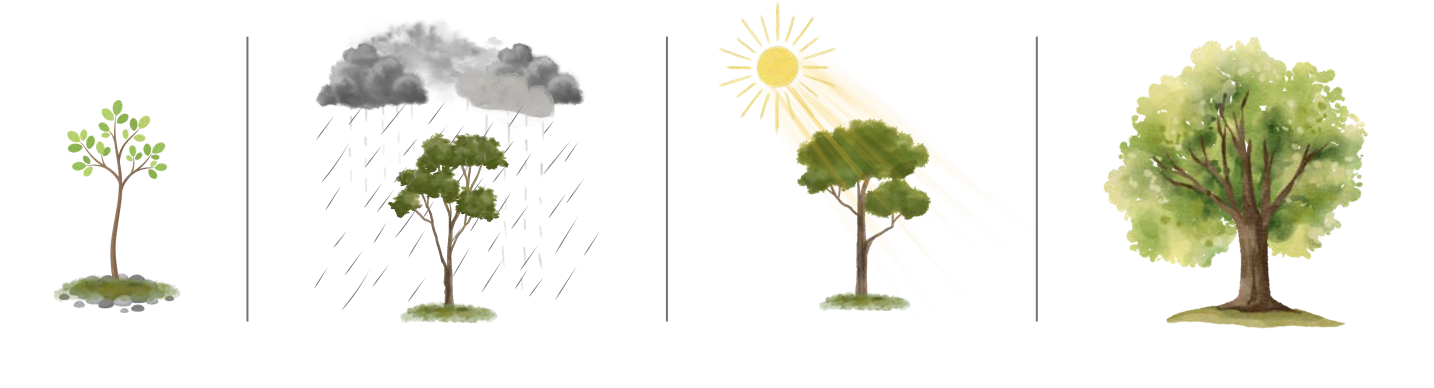
Eventually our relationship can become like an old oak tree, its roots traveling deep into the earth and beneath us. They aren’t strong because our relationship has always been easy. Each difficult conversation, each repair, and each moment we turn toward, rather than away, from each other strengthens us. Over time, our trusted relationship becomes something we can lean into that holds us steady when needed. We’re aware of all the complexity we’ve moved through and grown from, and we feel safe and held as we enjoy the good in life and in each other!
Copyright © 2026 Dr. Julie E. Waters, Psy.D.
To learn more about different problematic ways of conflicting, giving each other productive feedback, and other common questions regarding productive conflict, take a look at the full FREE workbook here.